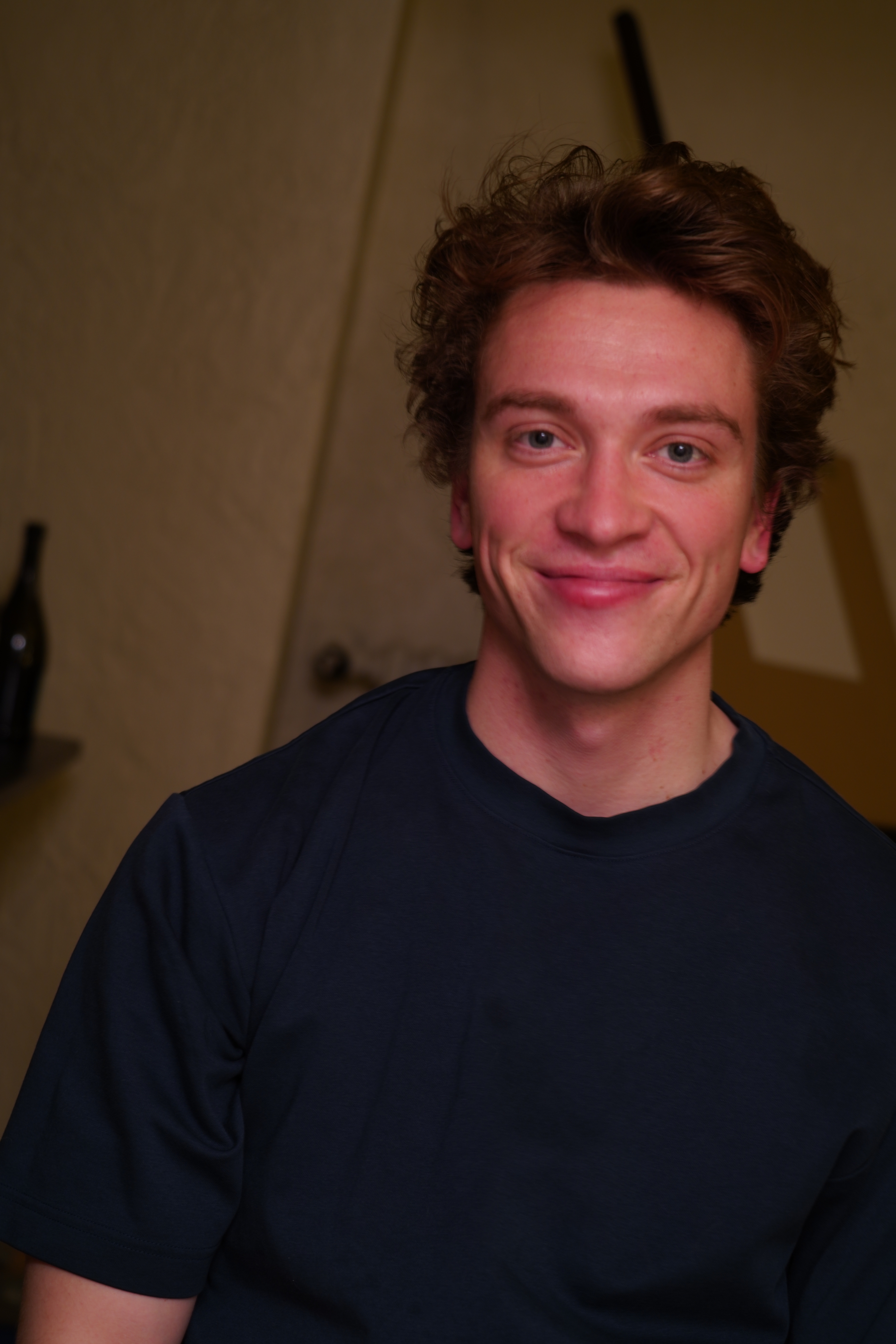
Hello! How are you doing? really? I hope you are well. Maybe they find you calm. Maybe they find you on a beach. Maybe they find you far from home. or in bed. Maybe they find you with your eyes partially closed. Maybe you should take a break. Maybe we should all take a break. Maybe this page never finds you.
My name is Andrew. I am 32 years old. Unless I'm not. There is a snippet of code which calculates my age. but it has no way of knowing if I am still alive. It just presumes.hopes. as I hope. and maybe you hope too?
I grew up in Walla Walla, Washington — a small town in Eastern Washington, sixty miles southeast of the Columbia River. The Channeled Scablands, coulees, and exposed basalt are remnants of large outburst floods from the deglaciation of the Laurentide ice sheet. I've lived my whole life between places that are glaciated, deglaciated, or flood prone.
I am an Assistant Professor of Earth, Environmental and Planetary Sciences at Rice University. Rice is located in Houston, Texas. It's sunny here today. according to a forecast from a model developed by NCAR. Like many Earth-system scientists, I use models maintained and developed by NCAR in my work.
I study ice sheets. In my work, I ask questions like: How much and how fast will ice sheets contribute to sea level in the next century? What drives ice shelf melt? How does ice deform and fracture? How do glaciers slide? How does the solid earth affect glacier flow? And how have ice-sheets and oceans changed in Earth's history? Most of the time, I do this work in Antarctica and GreenlandAntarctica and Greenland. Sometimes I also think about Mars, which also has large ice caps. To investigate these questions, I use satellite geodesy and altimetry. and groundbased and airborne geophysics. and orbital radar sounders. and ocean hydrographic observations. and models of ice flow and ocean circulation.
I am also the director for Shifting Land, Rising Seas. an interdisciplinary NASEM project that improves Gulf Coast sea-level projections. by explicitly monitoring and modeling vertical land motion from sediment loading and compaction, groundwater and hydrocarbon withdrawal, and glacial isostatic adjustment. We then turn these projections into tools that help people plan for what's coming.
I also make art. I am a member of the art-science collective Glacial Hauntologies. – an interdisciplinary collaboration exploring how ice –past ice, current melt, and future glacial change– reoccurs as a persistent hauntology across 20th and 21st century landscapes. and scientific research. and media. and day-to-day life. We interweave glaciology and artistic practices across print, sound, textile, movement, fieldwork and physics.glaciers. My work is attentive to process, context, relationships, and how people understand themselves within a project.